The Loom Ledger: A Leeds Trail for British-Mill Cloth
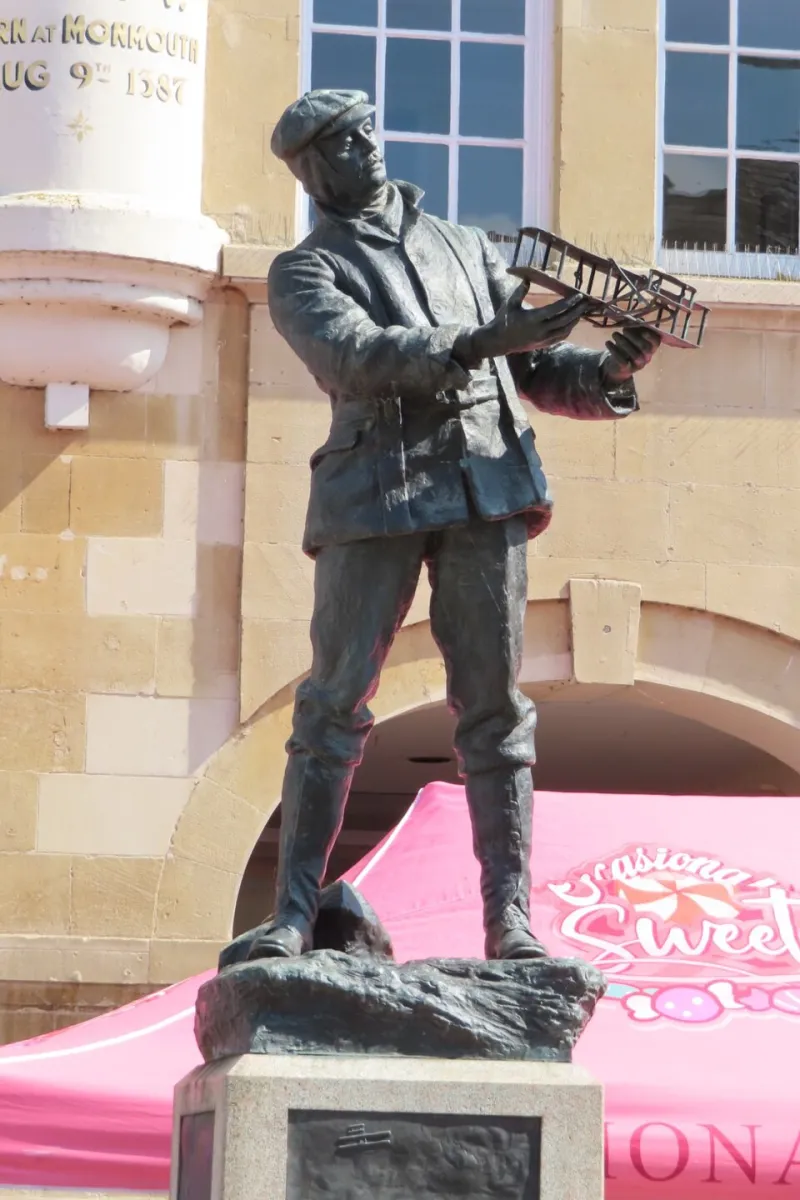
Photo: Philip Halling , CC BY-SA 2.0, via Wikimedia Commons
There is a particular feel to a rail of good wool. It is not soft in the way a fleece is soft. It has a bit of grit, a bit of memory. You pick up a sleeve and it holds its shape for a second before falling back. In 2026, that feel is being sold to us with more words than ever: heritage, traceable, British-milled, small-batch. Some of it is genuine. Some of it is a swing tag doing a lot of heavy lifting.
Leeds is a good place to test the difference. The city grew up around cloth, and although the industry looks different now, the mills did not vanish entirely. Abraham Moon is still weaving in Guiseley. Huddersfield fine worsteds still carry weight in tailoring. Harris Tweed has its own legal definition and orb mark. The question for a shopper is simpler: can the shop tell you where the fabric began, and can they tell you without reaching for a brochure?
This trail is deliberately short. Three clusters, one afternoon, and one recurring question.
Start with the question, not the rail
Most of us walk into a boutique and go straight to the colour. Try going to the label instead. Ask: “Which mill is this cloth from?” not “Is it British?” The second question is too easy to answer with a yes that means very little. A jacket can be designed in Leeds, cut in Portugal and made from Italian cloth. That is not a crime. It is just not the same story as a coat made from wool woven in Yorkshire.
The good shops will not flinch at the mill question. They will name the mill, or at least the town, and they will usually tell you why they chose it. “We bought it because the colour was right for winter” is a good answer. “We bought it because the mill only runs this cloth in small batches” is an even better one. If the answer is a vague wave towards “British heritage”, smile and move on.
The trail: three clusters, one afternoon
Kirkgate Market and the edges
Start at Kirkgate. Even if you are not buying fabric by the metre, the market is a useful calibration stop. You can feel the difference between a lightweight wool and a proper coating, between a dry cotton and something that has been finished to feel slippery. A lot of genuine mill cloth in Leeds arrives as short runs, overruns and end-of-line pieces, and market traders are often closer to that supply than a polished city-centre rail.
Walk the edges of the market and the nearby independents. Look for shops that display a small rail rather than a wall of identical hangers. Ask what they have bought for winter 2026 and whether any of it comes from Yorkshire or Lancashire mills. You are not looking for a lecture. You are looking for a shop that knows the difference between “woven in Britain” and “made in Britain”.
The arcades and the tailoring pockets
The Grand Arcade, Thornton’s Arcade and the streets around them are where Leeds does its quieter tailoring. This is where you are more likely to find a jacket with a named lining, a spare button and a shop assistant who can tell you why a Huddersfield worsted hangs differently from a softer tweed. Look inside the jacket. The lining is where costs get cut, and it is also where a good shop will show its working. Bemberg and cupro are not magic words, but they are a sign that someone thought about the inside as well as the outside.
If a piece claims British-milled cloth, ask about the lining and trims too. British cloth with an imported lining is normal. British cloth with a lining nobody can name is a question mark, not a scandal. The point is not purity. The point is a paper trail.
Chapel Allerton and Headingley
Finish in the neighbourhoods. Chapel Allerton and Headingley have the kind of independent boutiques where the owner is often the buyer, which means they can tell you the story without checking a spreadsheet. This is where you are most likely to hear about limited dye lots, small runs and the awkward business of buying British cloth without blowing the retail price out of the water.
Ask about the winter order book. Ask what sold out and what they wish they had bought more of. Ask whether they would rather have a broad range of cheap cloth or a narrow range they can stand behind. Most will give you an honest answer, because they are the ones who have to explain the price to the person standing in the fitting room.
How to spot a genuinely mill-sourced piece
A few practical checks, in no particular order:
- The tag names the mill or the mill town. “British heritage” is not a mill. “Woven in Guiseley” is a start.
- The composition is specific. “100% wool” tells you more than “wool-rich”. “Wool blend” can be perfectly good, but it should not be dressed up as something it is not.
- The hand-feel matches the claim. Tweed should feel like tweed. Cotton should feel dry and a little crisp. If a “British wool” coat feels suspiciously limp, ask again.
- The shop can explain the buy. Good buyers remember the cloth. They remember why they chose it, what it cost, and who else was looking at it.
- The price is consistent with the story. A coat at £120 that claims British-milled wool is not automatically a lie, but it is worth a second look. British cloth usually costs more because the runs are smaller and the chain is shorter.
- The finishing is not an afterthought. Spare buttons, a decent lining, a care label that makes sense. These are not proof of mill provenance, but they suggest a shop that cares about how a garment lives.
What the price difference actually buys
Expect to pay more. A British-milled wool blazer will often sit £60 to £120 above a comparable high-street piece, and a coat can be £100 to £250 more. That difference is not just the cloth. It is smaller production runs, limited dye lots, UK finishing, and the time a buyer spends building a relationship with a mill. It is also the shop’s willingness to carry something that will not be repeated in every size and colour.
What it does not buy is a guarantee of style. A well-cut coat in an ordinary cloth will beat a badly cut coat in a beautiful one every time. Mill provenance is a starting point, not a personality. The useful question is whether the cloth makes the garment better, and whether the shop can tell you why it chose it.
A note on cotton, cord and linings
Not everything needs to be tweed. British cotton weaving is a smaller world than wool, but Lancashire and Yorkshire still have mills and finishers working in drills, corduroys and linings. Ask about those too. A cotton shirt in a good mill cloth can be just as worth the money as a wool coat, and a decent lining can outlast the shell. If a shop cannot name the lining, it is not a red flag. It is just the next question.
The trail in practice
Go on a weekday if you can. Start at Kirkgate, walk up through the arcades, then take the bus out to Chapel Allerton or Headingley. Budget two hours, not a full day. Wear a neutral base layer so you can try things on without wrestling a heavy coat. Take a tote and a notebook, or use your phone to photograph the labels. Do not try to do the whole city in one go. The point is not to tick off shops. The point is to find one or two places that can answer the cloth question without blinking.
Leeds is lucky here. The mills are not a distant myth. They are a bus ride away, and sometimes the cloth on the rail has a postcode you can actually visit. Ask the question. The good shops will be glad you did.